
The Octalysis Framework: Why People Engage
On looking beyond points, badges and streaks to understand what is actually motivating people to keep going.
You've felt this without knowing why.
The compulsion to check your phone one more time. The satisfaction of a completed task on a to-do list. The way a game pulls you back, night after night, with its promises and achievements.
We call it engagement. But engagement is just the output. What matters is what's driving it.
There's a pattern underneath it all. The same pattern.
Yu-kai Chou, a gamification designer, spent years mapping why systems hook us. What he found wasn't about game mechanics. It was about human motivation.
Eight core drives. Not universal laws, but the levers that move behavior. And once you see them, you see them everywhere.
Not all drives are equal. Some are intrinsic. Some are not.
The drives exist on a spectrum. On one end: drives that make you feel capable, creative, part of something bigger. On the other: drives rooted in scarcity, fear, loss.
This distinction matters. Systems powered by intrinsic drives can feel empowering. Systems powered by extrinsic drives can start to feel addictive.
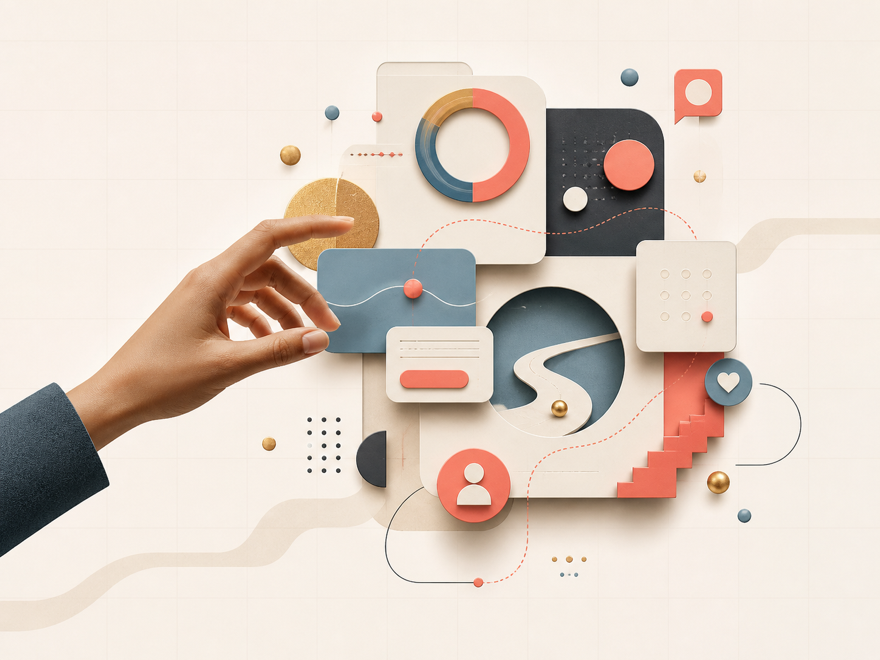
The visible effect is engagement. But what's driving it?
The insight
Engagement isn't designed. It's motivated.
And the same eight motivations work across games, apps, social media, and work systems.
Intrinsic to Extrinsic Drives
Left side: Meaning, accomplishment, creativity, ownership, social connection. These feel expansive.
Right side: Scarcity, unpredictability, loss avoidance. These feel urgent and limiting.
The Framework
Eight core drives. All of them are in you.
You don't need all eight to feel engaged. But systems designed around these drives can be surprisingly effective, especially when you do not notice them working.
The Octagon
Explore the framework
Choose a point
Click a vertex on the octagon—or focus it and press Enter—to see what motivates that drive.
Understanding Each Drive
Epic Meaning
Epic Meaning & Calling
The sense of serving something bigger than yourself. Wikipedia editors believing they're building human knowledge. Charity runners fundraising for a cause. The drive that makes you feel like what you're doing matters.
Accomplishment
Accomplishment & Progress
The satisfaction of overcoming challenges and seeing measurable progress. Leveling up in a game. Completing a certification. Crossing items off a list. The drive to become better.
Creativity
Empowerment of Creativity
The need to express yourself and see your choices create real outcomes. Customizing a character. Building something from components. This is agency: the feeling that your input creates change.
Ownership
Ownership & Possession
The attachment that comes from building or acquiring something that's yours. A collection you've curated. A house you've invested in. The drive to accumulate and protect what you've claimed.
Social
Social Influence & Relatedness
The connection you feel with others. Being part of a community. Receiving recognition from peers. The drive that makes you want to belong and be seen.
Scarcity
Scarcity & Impatience
The urgency created by limited time, resources, or access. Flash sales. Exclusive drops. Time-limited events. It is rooted in FOMO, the fear that you will miss out if you do not act now.
Unpredictability
Unpredictability & Curiosity
The pull of not knowing what comes next. Slot machines. Loot boxes. The "one more episode" of a series. The drive that keeps you engaged through uncertainty and the hope for surprise.
Loss
Loss & Avoidance
The fear of losing what you have. Streaks you do not want to break. Progress bars that could empty. It is powered by loss aversion. We tend to avoid losses more strongly than we pursue gains.
These drives aren't in games. They're in everything.
The systems we interact with every day, from social apps and fitness trackers to work software and shopping platforms, are built around these same eight drives.
None of them are accidents. They're intentional choices made by people who understand exactly what levers to pull.
Social media: The masterclass in all eight.
Epic meaning (you're building your personal brand). Accomplishment (likes, comments, follower count). Creativity (choosing what to share, how to frame your life). Ownership (your profile, your audience). Social influence (being seen, being validated). Scarcity (limited attention, algorithmic feeds). Unpredictability (you don't know which posts will blow up). Loss (you might lose followers if you don't post regularly).
Every drive activated. Every drive pulling you toward more.
And here's the uncomfortable part: it works.
The most engaging systems are designed this way because it works. Whether it is a game, a social network, or a work dashboard, the drives that pull us in are often the ones behind the engagement metrics.

From social networks to fitness apps to work management tools
The design decision
Engagement ≠ Wellbeing
A system can be highly engaging while making users feel worse. These are not the same thing, and they're rarely aligned.
The Design Implication
Intrinsic drives build users.
Systems powered by meaning, accomplishment, creativity, and ownership feel empowering. People come back because they're building something real. They feel agency. They feel invested.
These systems require more upfront clarity and skill. They don't grab attention quickly. But they hold it.
Extrinsic drives build addiction.
Systems powered by scarcity, unpredictability, and loss operate in the nervous system. Faster response time. Harder to resist. But exhausting to stay in for long.
These systems are cheap to implement and lightning-fast to grab attention. But they burn users out.
Some systems choose better. Here's how.
Duolingo is a language-learning app that's crushingly effective. It uses all eight drives. But notice the balance.
Yes, you have streaks (loss drive). But you also have genuine progress toward fluency (accomplishment). Yes, the app is social. But the core hook is you getting better at something.
Compare that to a slot machine. Just one drive.
The slot machine only activates unpredictability and loss avoidance. Spin the lever, hope for a match, fear of emptiness. That's it. It's hypnotic and empty at the same time.
Duolingo + slot machine = an app that pulls you in and makes you feel like you're learning. That's the power of mixing the drives deliberately.
The honest question: Who are you optimizing for?
If you're designing something, the drives you choose reveal your priorities. Do you want users who feel good about what they've accomplished? Or users who can't stop, regardless of how they feel?
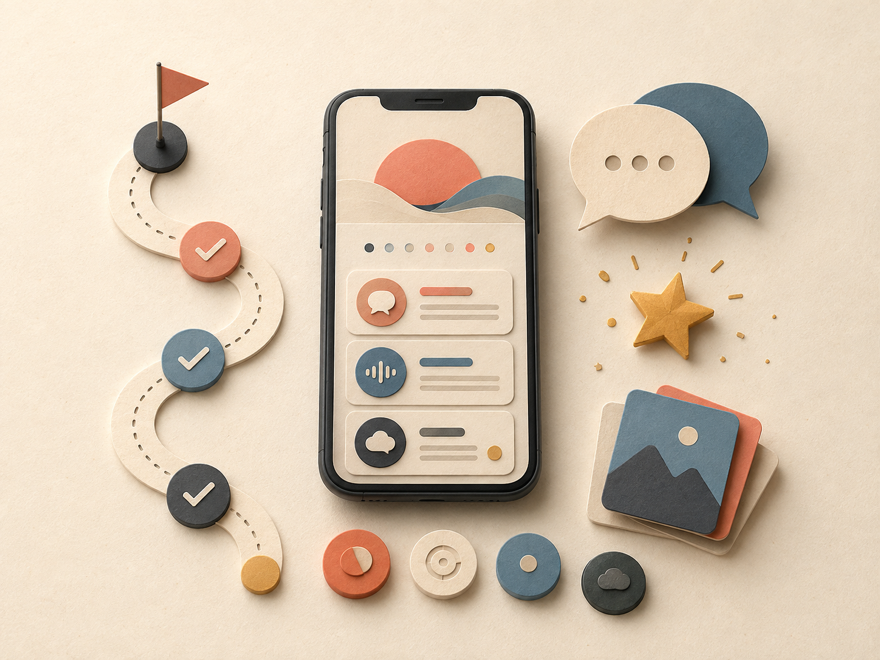
A system that uses all eight drives while staying anchored in real accomplishment
The Meta-Point
What It Means to Know This
If you're a user, awareness is power.
Once you see these eight drives, you start to notice them everywhere: in apps, in games, and in the ways systems encourage you to keep going. Then you can ask: Am I here because this is genuinely valuable to me? Or because the system is tapping into a drive I had not noticed?
That question changes how you interact with the systems around you.
If you're a designer, it's a responsibility.
You now know how to hook people. The question is: will you? Will you pull all eight drives, creating addiction wrapped in value? Or will you anchor in intrinsic drives, creating systems that people feel good about using?
This isn't about being nice. It's about deciding what kind of product you want to build.
The Honest Choice
You are not immune to these eight drives.
Neither are your users.
The Octalysis Framework is powerful not because it's manipulative, but because it's true. These drives are real. They move behavior. And they're being used, right now, in the products and services you interact with every single day.
The question is not whether to use them. It is which ones you choose, and why. That decision says a lot about what you are actually trying to build.
← Back to Thinking