01 — Arrival
A different kind of room.
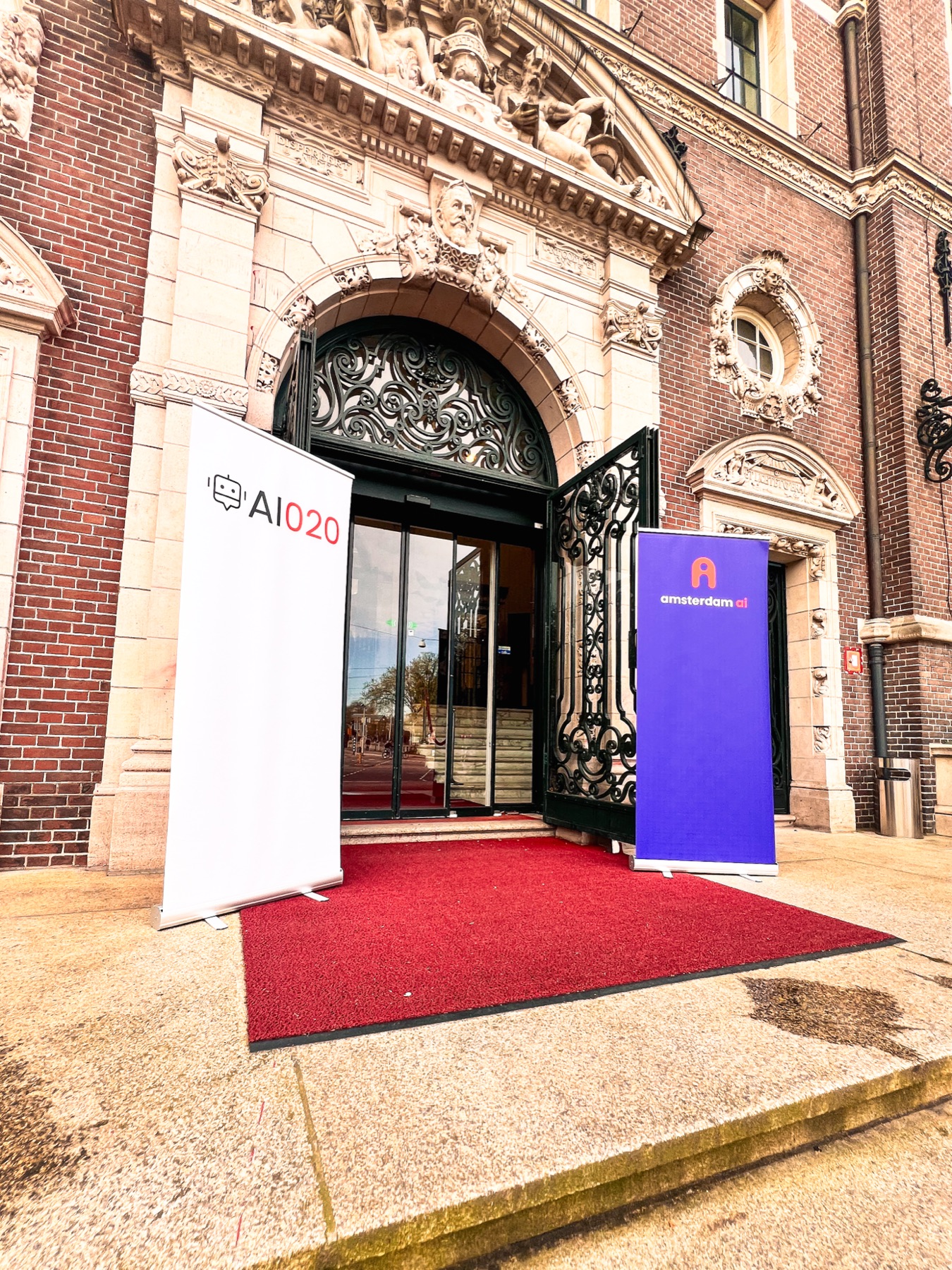
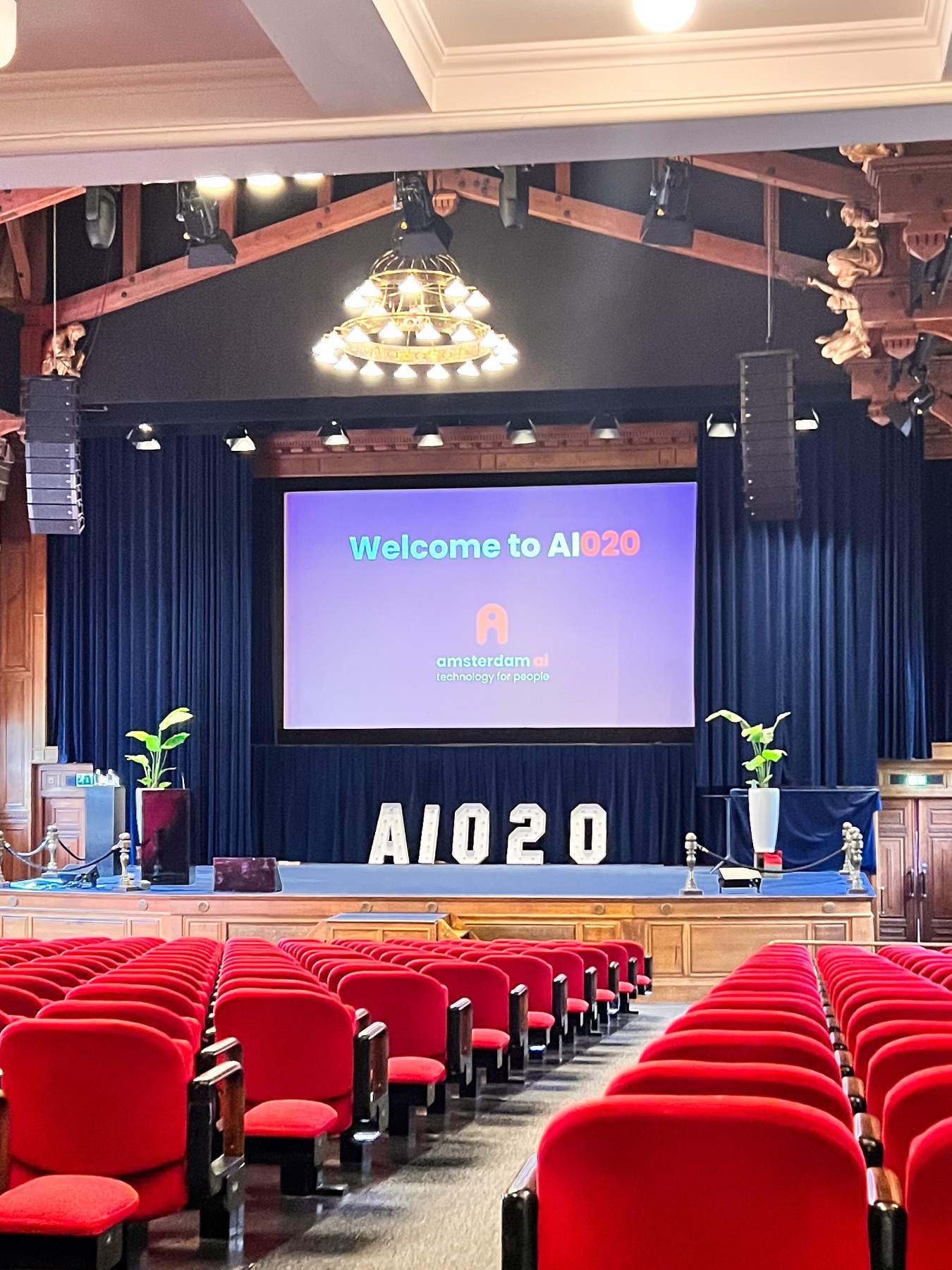
Amsterdam AI's AI020 was held in a grand venue in the city — ornate ceiling, red velvet seats, the kind of space that signals something is being taken seriously.
Not a tech campus. Not a design conference. Something else.
02 — Before the crowd
The quiet before a room fills with intent.
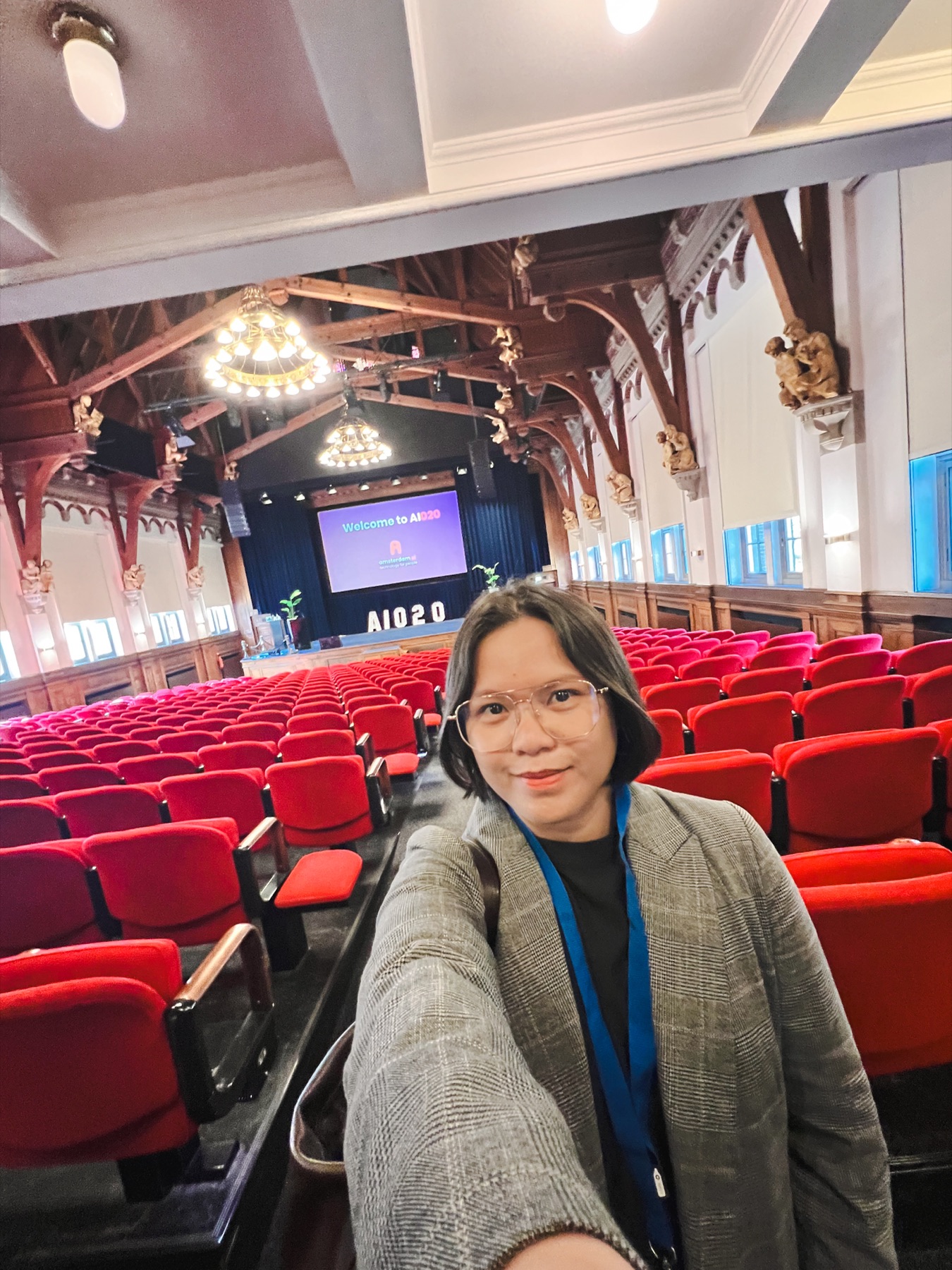
I arrived early. The seats were still empty, the screen read "Welcome to AI020," and I had a moment to register where I was — a room built around the question of what AI is actually for.
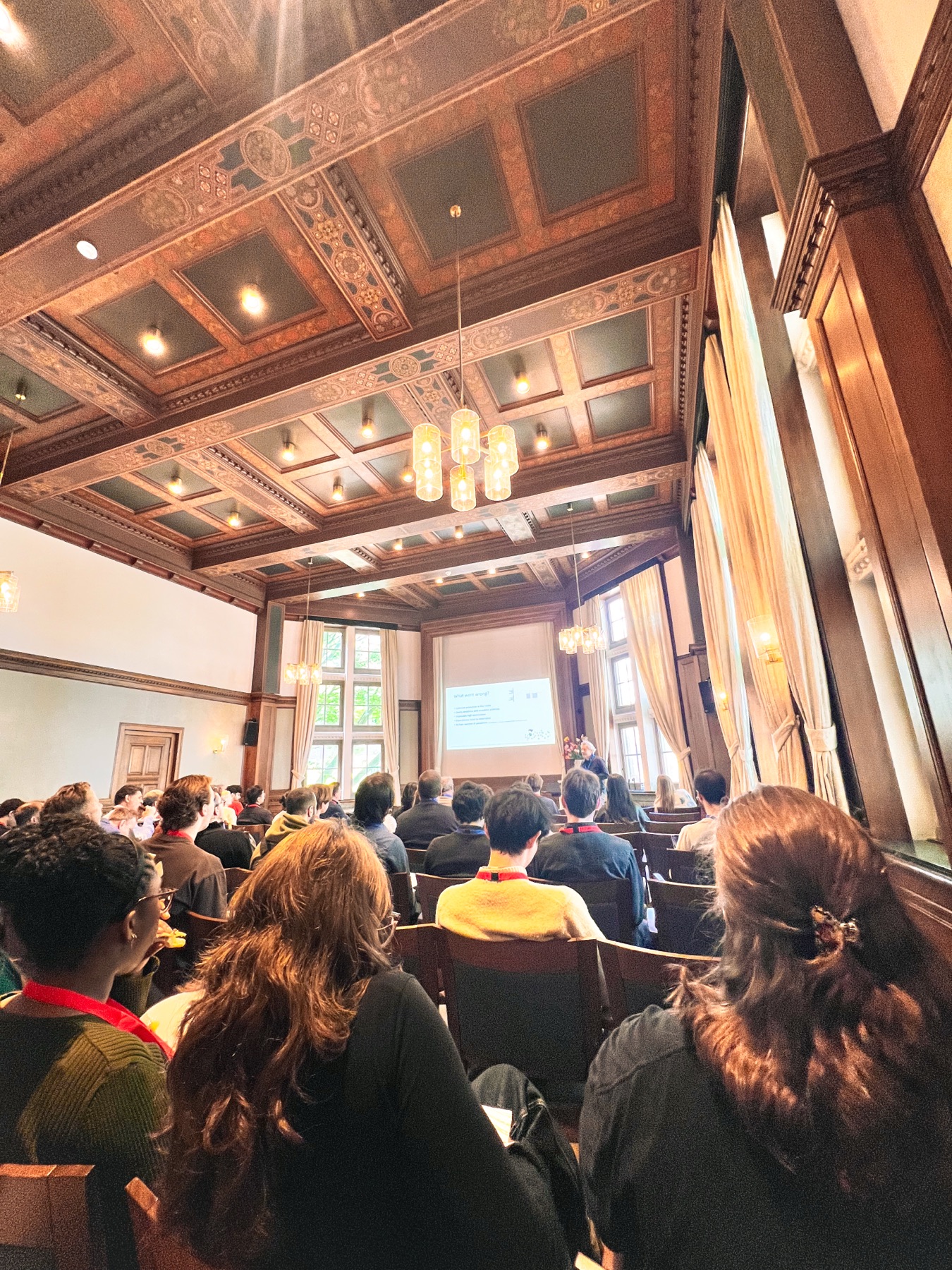
Keynotes from Prof. Max Welling and Prof. Henk Marquering. Not product launches. Research with weight.
03 — In the minority
Researchers, engineers — and me.
The crowd was mostly AI researchers, ML engineers, and policy people. Product designers were rare. I was probably one of very few.
That asymmetry was the point. I didn't come to present my perspective. I came to update it.
04 — The talks
Every talk was grounded in real work.
Welling's framing: not what to build, but what problems are worth solving. Marquering walked through AI's history — the rises, the winters, the hype cycles — and what it means that this wave feels different.
⚖️ Understanding where AI has been changes how you read where it's going.
05 — The identity I brought
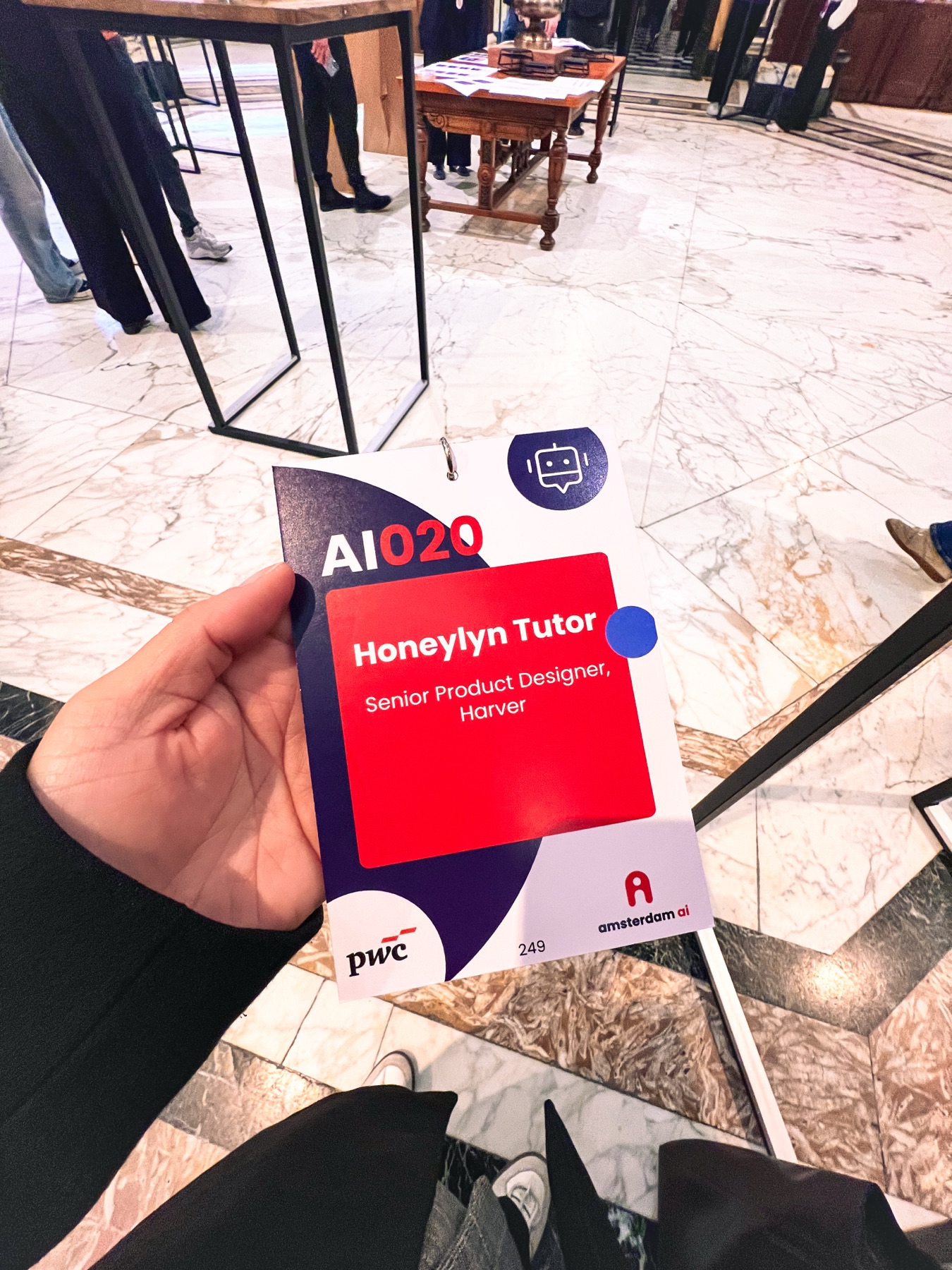
Senior Product Designer. That badge matters.
The badge said Harver — an HR assessment platform where the people I design for grapple daily with accuracy scores, probabilistic outputs, and model confidence.
Tools like Claude or Figma handle the surface. The harder work is building mental models that help decision-makers trust — and interrogate — what an AI is actually telling them.